

Turbocharger Bearing Failure: How Oil Starvation Damages Heavy-Duty Engines
Turbocharger bearings depend on a steady supply of clean engine oil. Learn how oil starvation damages heavy-duty truck turbos, which warning signs matter, and how Detroit fleets can prevent a turbo failure from becoming a larger engine repair.
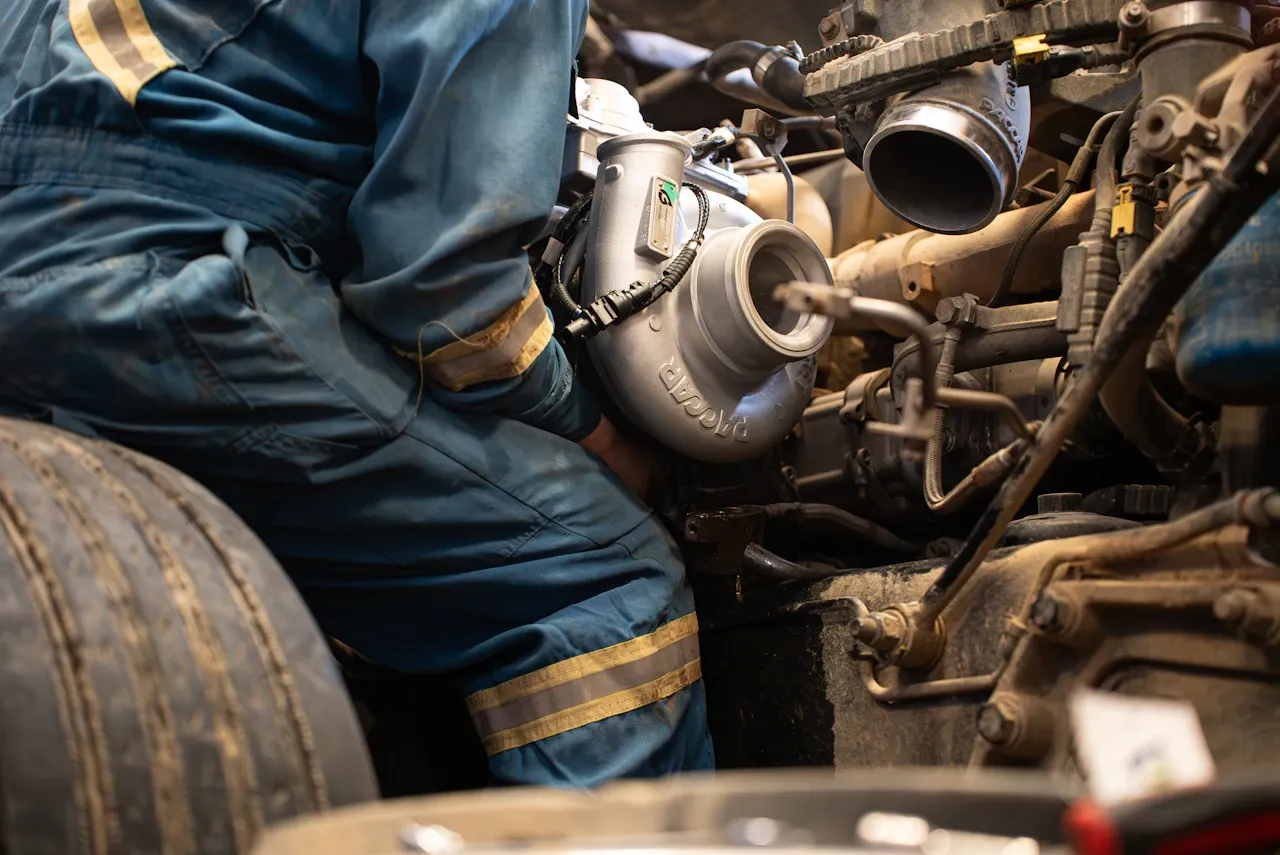
A turbocharger can spin at tremendous speed while relying on a thin film of oil to protect its bearings. Interrupt that lubrication, and a seemingly minor oil-supply problem can quickly become turbocharger bearing failure and potentially contribute to much more expensive engine damage.
For Detroit fleet operators, recognizing turbo oil starvation early can mean the difference between correcting a lubrication problem and dealing with a failed turbocharger, contaminated intake or exhaust system, and additional engine repairs.
What Causes Turbocharger Bearing Failure?
Turbocharger bearings support a rotating shaft connecting the compressor and turbine sides of the turbo. Because this rotating assembly operates at very high speeds and temperatures, dependable lubrication is critical.
Engine oil lubrication necessary to prevent it from overheating within minutes without it. When the turbocharger receives insufficient oil, the protective oil film between moving surfaces can break down, increasing friction, heat, and wear.
Oil starvation can develop because of several conditions, including:
- Low engine oil level
- Restricted or damaged turbo oil supply lines
- Contaminated or degraded engine oil
- Improper oil viscosity or specification
- Delayed oil delivery during operation
- Oil leaks that reduce available lubrication
- Installation problems affecting turbo oil flow
- Engine lubrication-system problems
Finding the cause matters. Replacing a damaged turbo without correcting the lubrication problem can put the replacement unit at risk.
How Does Turbo Oil Starvation Damage Turbocharger Bearings?
A turbocharger's shaft needs consistent lubrication to rotate without excessive metal-to-metal contact. When oil flow drops, friction increases and generates additional heat.
That combination can rapidly damage bearing surfaces. As bearing clearances deteriorate, shaft movement can increase, potentially allowing the compressor or turbine wheel to contact its housing.
At that stage, you're no longer dealing with an oil-supply issue alone. You're dealing with mechanical turbocharger damage that can affect airflow, engine performance, and surrounding systems.
Can Low Engine Oil Cause Turbocharger Failure?
Low engine oil can reduce the lubrication available to engine components, including the turbocharger. Heavy-duty diesel engine oil does more than reduce friction. It also absorbs heat while lubricating internal engine components before that heat can be transferred elsewhere in the lubrication and cooling process.
A low oil level should therefore never be treated as a minor maintenance detail. Your technicians should determine why the level dropped, correct the cause, and inspect for related damage when appropriate.
What Are the Warning Signs of a Failing Turbocharger Bearing?
Turbocharger bearing damage does not always announce itself with an immediate breakdown. Changes in sound, oil consumption, performance, or exhaust behaviour may appear first.
Potential warning signs worth investigating include:
- Unusual turbocharger noise: Whining, scraping, or other new sounds can justify further inspection.
- Reduced engine performance: Turbocharger problems can interfere with the airflow a diesel engine needs to produce power efficiently.
- Increasing oil consumption: Oil entering areas where it shouldn't can indicate a turbocharger or broader engine problem.
- Visible exhaust smoke: Changes in exhaust appearance can accompany oil or air-management problems, although smoke alone does not identify a failed turbo.
- Oil around turbo plumbing: Unexpected oil accumulation warrants inspection to determine its source and severity.
- Excessive shaft movement: A qualified technician can evaluate the turbocharger's rotating assembly and bearing condition.
These symptoms can have more than one cause. Proper heavy-duty diesel diagnostics should confirm the problem before components are replaced.
Why Do Restricted Turbo Oil Lines Cause Problems?
A turbocharger may be surrounded by engine oil elsewhere in the lubrication system and still fail if oil cannot reach its bearings properly. That's why technicians diagnosing turbo oil starvation should inspect the oil's path to and from the turbo rather than simply checking the dipstick.
Restrictions, damaged lines, contamination, or installation problems can interfere with proper flow. A technician should also consider whether the underlying engine lubrication system is supplying oil correctly.
This distinction is important for Detroit fleet maintenance. A failed turbocharger can be the damaged component you see, while the actual root cause sits elsewhere in the lubrication system.
Can Dirty Engine Oil Damage a Heavy-Duty Turbocharger?
A turbocharger depends on a steady supply of clean engine oil for lubrication. As oil deteriorates or collects contaminants, it can contribute to wear inside components operating at high speeds and temperatures.
Good turbocharger maintenance starts with the engine manufacturer’s requirements. Follow the recommended oil type, filter specifications, and service intervals for that engine instead of applying the same maintenance schedule to every truck.
Oil condition also deserves attention after a turbocharger failure. Before installing a replacement, technicians may need to determine whether contaminated oil, restricted oil flow, or another lubrication issue contributed to the damage. Replacing the turbo without correcting the underlying lubrication problem could lead to another failure.
How Can Turbo Failure Lead to Heavy-Duty Engine Damage?
A failed turbocharger can affect more than engine performance. Since the turbo works with the intake, exhaust, and lubrication systems, certain failures can create problems elsewhere in the engine.
The exact risk depends on what failed. Technicians may find concerns such as:
- Oil entering areas where it should not be
- Restricted or disrupted airflow
- Damage involving turbocharger rotating components
- Changes in exhaust or intake performance
Drivers should pay attention when the truck suddenly behaves differently. Severe power loss, abnormal turbo noise, or unexpected smoke deserves an inspection rather than several more routes on the road.
Continuing to operate the truck with obvious heavy-duty truck turbo failure symptoms may turn an isolated turbo problem into a more extensive repair.
What Should Technicians Check After a Turbocharger Failure?
Don't treat a failed turbo as an isolated remove-and-replace job. A root-cause inspection helps protect the replacement component and identifies problems that may have contributed to the original failure.
After turbocharger bearing failure, inspection may include:
- Engine oil level and condition
- Turbocharger oil supply and drain paths
- Relevant oil lines and connections
- Evidence of oil leakage
- Intake and charge-air plumbing
- Turbocharger compressor and turbine condition
- Engine lubrication-system operation
- Related contamination
- Manufacturer-specific installation requirements
The exact diagnostic process depends on the engine and turbocharger involved. Manufacturer procedures should guide specifications, measurements, and component replacement decisions.
How Can Detroit Fleets Prevent Turbocharger Oil Starvation?
Preventive maintenance provides your best opportunity to catch lubrication problems before a turbocharger suffers severe damage. Oil levels, oil condition, leaks, filters, and maintenance history all deserve routine attention.
For commercial trucks working throughout Detroit and Southeast Michigan, technicians should also consider vehicle duty cycle. Trucks operating under demanding loads, extensive idle time, frequent stops, or other severe-duty conditions may have maintenance requirements that differ from trucks with less demanding operating patterns.
Good maintenance records help here. Tracking oil consumption, leaks, turbo repairs, and recurring lubrication concerns makes patterns easier to spot across individual trucks and the wider fleet.
Why Does Root-Cause Diagnosis Matter Before Installing a New Turbo?
A replacement turbocharger still depends on the same engine lubrication system that supplied the failed unit. If that system caused the original turbocharger bearing damage, bolting on another turbo doesn't solve the underlying problem.
Technicians should determine why the first component failed before returning the truck to regular service. That may involve checking lubrication, oil supply and drain paths, contamination, installation conditions, and other relevant engine systems.
For fleet managers, this approach can also improve maintenance decisions. Instead of repeatedly replacing symptoms, your maintenance program starts identifying patterns and correcting causes.
Protect Your Heavy-Duty Engine From Turbocharger Damage
Turbocharger bearing failure can begin with something as fundamental as inadequate lubrication. Keeping the correct engine oil at the proper level, maintaining filters, checking for leaks, and investigating oil-flow problems can help protect the turbocharger and the engine components that depend on reliable lubrication.
Wehn your truck has abnormal turbo noise, oil consumption, power loss, smoke, or suspected turbo oil starvation, contact Battle Truck Solutions. A proper inspection can identify the source of the problem before a damaged turbocharger contributes to more extensive downtime. For more information about engines, read our article on signs your Cummins needs professional service.