

5 Common Misdiagnoses That Professional Diesel Diagnostics Can Prevent
Professional diesel diagnostics can stop expensive guesswork before it starts. Learn five common heavy-duty truck misdiagnoses, why symptoms overlap, and how proper testing helps Detroit fleets find the real fault before unnecessary parts are replaced or downtime grows.
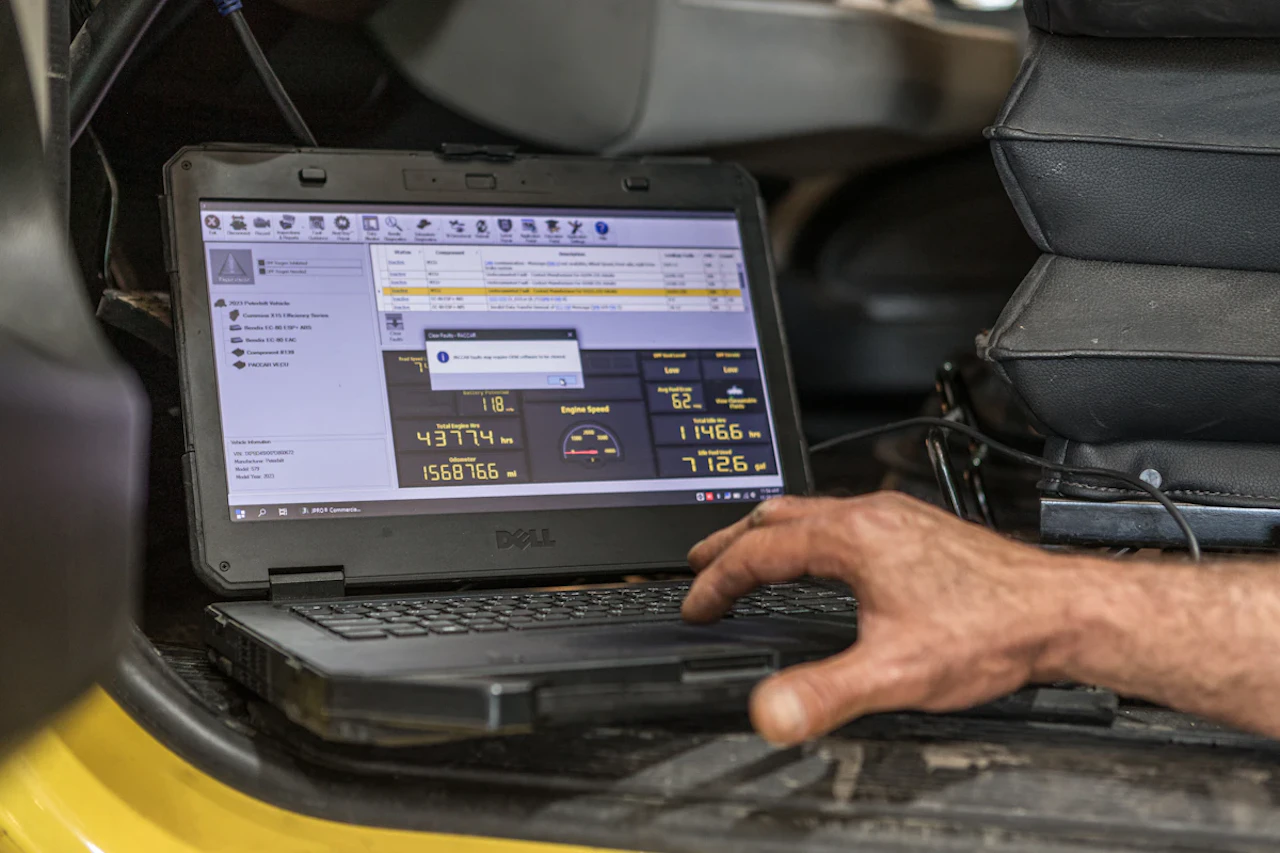
A truck can lose power, run rough, or trigger a warning light without making the failed component obvious. Several systems often produce similar symptoms, which makes replacing parts based on a hunch an expensive gamble.
Professional diesel diagnostics use fault data, electrical testing, live readings, and mechanical checks to isolate the actual problem before repairs begin.
Why Do Heavy-Duty Diesel Problems Get Misdiagnosed?
Modern diesel trucks combine mechanical systems with sensors, wiring, electronic controls, aftertreatment components, and networked modules. One fault can influence several systems, while one symptom can have several possible causes.
A diagnostic trouble code helps narrow the search, but it does not automatically identify the failed part. Diagnostic trouble codes show where the control system detected a problem, so technicians still need to determine why that condition occurred.
That distinction helps prevent unnecessary parts replacement. Developments in advanced truck diagnostics have made data increasingly useful, but interpreting that information still requires a logical testing process.
1. Is Low Power Always a Turbocharger Problem?
No. Weak acceleration, poor pulling power, and low boost may make the turbocharger look guilty, but several other faults can create similar symptoms. A restricted air filter, leaking charge-air connection, fuel delivery problem, sensor fault, aftertreatment restriction, or incorrect engine command can all reduce diesel engine performance. Replacing the turbocharger without testing those possibilities can leave the original complaint unchanged.
A technician can compare commanded and actual boost, inspect the intake and charge-air system, review fault data, and check related sensors. Physical inspection can then confirm whether the turbocharger itself shows wear or damage.
This testing matters because a turbo failure may also be the result of another problem. Poor lubrication, for example, can damage turbocharger bearings, so replacing the turbo without correcting the cause can put the replacement unit at risk.
2. Does a No-Start Condition Always Mean the Starter Failed?
A truck that will not start can quickly lead to assumptions about the starter or batteries. Yet diesel no-start diagnostics often need to cover much more than the cranking system.
A no-start may involve:
- Weak or discharged batteries
- Corroded or loose electrical connections
- Starter circuit faults
- Fuel delivery problems
- Sensor failures
- ECM power or ground issues
- Network communication problems
- Insufficient fuel pressure
The first question is whether the engine cranks normally. A truck that does not crank requires a different testing path than one that cranks strongly but never starts.
Voltage measurements, starter circuit testing, fault codes, fuel pressure readings, and live engine data can separate those conditions. That process reduces the chance of replacing a starter when the actual problem lies elsewhere.
3. Is an Aftertreatment Warning Always a Bad DPF?
A dashboard warning involving regeneration or emissions does not automatically mean the diesel particulate filter needs replacement. The DPF captures particulate matter, but several sensors and supporting systems affect how regeneration operates.
Problems with temperature sensors, differential pressure readings, fuel delivery, exhaust leaks, or other aftertreatment components may interfere with normal regeneration. Excessive soot loading can also develop because of an engine problem upstream.
Proper aftertreatment diagnostics should examine relevant fault codes and sensor data before condemning an expensive component. A forced regeneration may sometimes be appropriate, but it should not become a substitute for finding the reason regeneration failed.
Replacing a DPF without correcting an engine or sensor issue can put the new component into the same operating conditions that caused the original problem.
4. Does an Electrical Fault Mean the Sensor Is Bad?
Sensors frequently appear in fault codes, but the sensor itself is not always defective. Damaged wiring, poor grounds, loose connectors, corrosion, reference voltage problems, or communication faults can produce readings that look like a failed sensor.
That is why diesel electrical diagnostics should include circuit testing rather than relying solely on a scan tool message. Technicians may need to inspect connectors, measure voltage, verify grounds, and check wiring continuity.
For example, an engine control module may receive an implausible reading and set a sensor-related code. Installing a new sensor will not solve the complaint if a broken wire prevents the correct signal from reaching the ECM.
Reliable truck diagnostic testing helps technicians move beyond the code description and identify the condition that actually produced it.
5. Is Rough Running Always a Fuel Injector Problem?
Rough idle, hesitation, smoke, or uneven power delivery can make a faulty injector seem like the obvious explanation. Injectors are important to combustion, but fuel system diagnostics should rule out other possibilities first. Low fuel pressure, contamination, restricted filters, air entering the fuel supply, sensor errors, compression problems, or electrical faults may cause similar behavior. An engine could also have more than one problem at the same time.
A technician can use cylinder contribution information, fuel pressure data, electrical testing, and other manufacturer-appropriate procedures to narrow down the cause. That evidence is more useful than replacing several injectors because the engine happens to run unevenly.
Testing also helps determine whether one cylinder behaves differently from the others. That can make subsequent mechanical or fuel-system inspection much more focused.
How Do Professional Diesel Diagnostics Reduce Parts Swapping?
Parts swapping starts when a repair decision is based mainly on symptoms or a fault-code description. The suspected component gets replaced, the truck is tested, and another component becomes the next guess if the problem remains.
Heavy-duty truck diagnostics use a more deliberate process:
- Confirm the driver's complaint
- Scan applicable control modules
- Record active and stored fault codes
- Review live operating data
- Inspect relevant wiring and components
- Perform electrical, pressure, or mechanical tests
- Compare commanded and actual values
- Verify the repair afterward
Not every concern requires every step. The testing path should follow the symptoms and evidence instead of treating the scan tool as a parts catalog.
This approach can save labor as well as component costs. More importantly, it gives the technician a better chance of fixing the original complaint during the first repair attempt.
Why Does Accurate Diagnosis Matter for Detroit Fleets?
Unexpected downtime creates scheduling problems whether you operate one commercial truck or an entire Detroit fleet. Repeated shop visits make that disruption worse when the first repair never addressed the actual failure.
Accurate diesel fault diagnosis helps maintenance managers make better repair decisions. Knowing what failed, why it failed, and whether related components were affected also improves maintenance records.
Those records can reveal recurring electrical faults, repeated aftertreatment issues, or failures tied to one operating condition. Over time, better information can support more focused preventive maintenance.
Drivers help as well. Reporting when a symptom occurs, what the gauges show, whether the engine is hot or cold, and what changed immediately beforehand gives technicians valuable diagnostic context.
Get the Diagnosis Right First
Professional diesel diagnostics can prevent costly misdiagnoses involving turbochargers, starting systems, aftertreatment components, sensors, and fuel injectors. Testing the complete system before replacing parts helps identify the actual failure and reduces unnecessary repair work.
Battle Truck Solutions provides diagnostic and electrical repair for heavy-duty trucks. If power loss or unusual engine behavior leads you toward a turbocharger concern, learning how turbo bearing failure develops can help you understand why finding the root cause matters.